
Empathy Is the Real Beauty Secret
Empathy Is the Real Beauty Secret Beauty retail doesn’t succeed because of products alone—it succeeds when people feel understood. This piece explores why empathy, listening, and human pace matter more than selling, and how confidence in beauty retail is built through connection, not pressure.
Empathy Is the Real Beauty Secret
The beauty industry is very good at talking about products.
Textures. Ingredients. Claims. Results.
What it talks about far less—despite knowing better—is the role human connection plays in how people actually feel in a store.
Makeup and skincare can enhance how someone looks.
Empathy changes how someone feels.
And feeling matters more than we admit.
People Don’t Come to Beauty Retail Just to Buy Products
They come because they’re unsure.
Unsure about their skin.
Unsure about how they look.
Unsure about what’s changed.
Unsure about what will work this time.
Beauty shopping is rarely neutral. It’s personal, often vulnerable, and tied to identity in ways most other retail categories aren’t.
When a customer feels rushed, dismissed, or sold to, that vulnerability turns into discomfort. And discomfort is the fastest way to lose trust.
We’ve All Met the Associate Who Didn’t Listen
Most people can remember an interaction where the associate talked at them instead of with them. More product. More claims. More recommendations—without pausing to understand what the customer actually needed.
Those interactions don’t just feel annoying.
They feel exposing.
Instead of feeling more confident, customers leave feeling unseen—or worse, judged.
That’s why empathy isn’t a “nice to have” in beauty retail. It’s foundational.
What Empathy Looks Like on the Floor
Empathy doesn’t mean being overly emotional or overly familiar.
It means being attentive.
It looks like:
asking a question and waiting for the answer
noticing hesitation and slowing the moment down
recognizing when reassurance matters more than information
understanding that someone’s relationship with their skin is personal
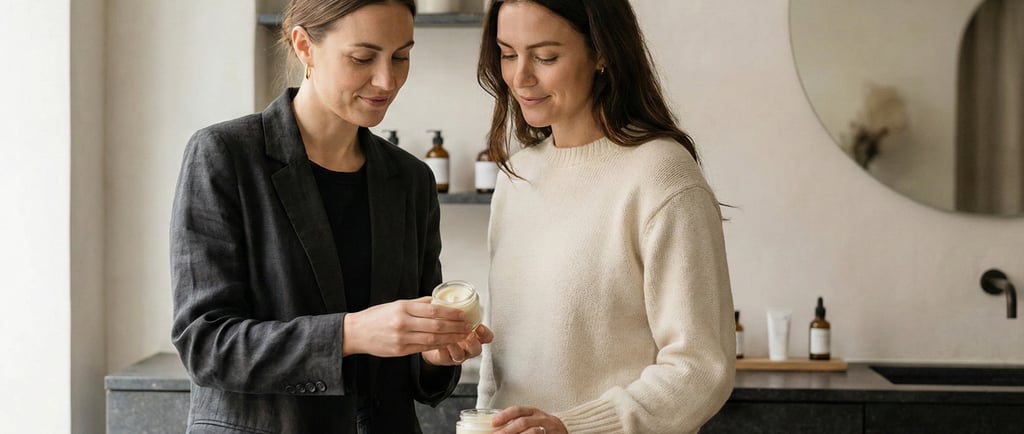
When empathy is present, the interaction shifts. The associate becomes a guide, not a salesperson. The store becomes a place of support, not pressure.
Customers relax. And relaxed customers make better decisions.
Confidence Comes From Being Understood
In beauty, confidence isn’t created by telling someone they need something. It’s created when someone feels understood enough to decide for themselves.
Great associates don’t position themselves as experts handing down answers. They act as translators—helping customers make sense of options, changes, and possibilities without taking control away.
That sense of agency is powerful. It’s also what brings people back.
Empathy Is Good Business—But That’s Not Why It Works
Yes, empathy improves retention. Yes, it builds loyalty. Yes, customers return to places where they feel respected.
But empathy works because it reduces friction in moments that matter.
When customers feel:
heard
respected
supported
unpressured
…the decision becomes easier. And easier decisions are good for everyone.
The Experience Matters More Than the Product—Even in Beauty
Beauty retail often assumes the product does the heavy lifting. In reality, the experience determines whether the product ever gets a chance.
Customers don’t remember every ingredient.
They remember how the interaction made them feel.
They remember whether they felt safe asking questions.
They remember whether someone rushed them.
They remember whether the store made them feel more confident—or more self-conscious.
That memory shapes the relationship far more than the purchase itself.
Empathy Is a Practice, Not a Personality Trait
The most important thing to understand about empathy is this: it’s not something people either have or don’t have. It’s something that can be practiced, supported, and reinforced.
Stores that prioritize empathy:
train for listening, not just knowledge
give associates permission to slow the interaction
value understanding over upselling
treat confidence as an outcome, not a tactic
Those stores don’t just sell beauty.
They become places people trust with something personal.
The Quiet Advantage
In a category filled with claims, launches, and promises, empathy is the quiet advantage that doesn’t expire.
It doesn’t trend.
It doesn’t need reinventing.
And it can’t be replicated online.
Empathy turns beauty retail from a transaction into a relationship. And relationships—not products—are what last.